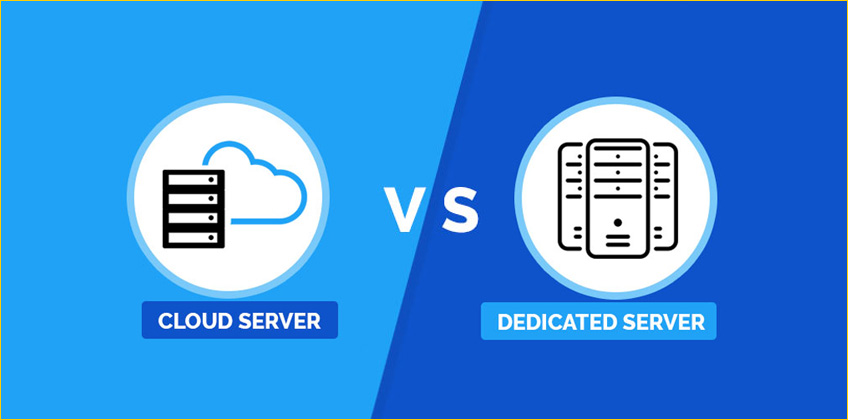
Selecting the right infrastructure to host your digital assets is one of the most critical decisions an organization can make. The underlying hosting architecture directly impacts website loading speed, user experience, data security, operational costs, and your platform’s ability to survive sudden influxes of traffic. When a website crashes during a major product launch or a viral marketing campaign, the culprit is almost always an infrastructure misalignment.
For growing businesses, the hosting debate typically narrows down to two powerful, enterprise-grade solutions: Cloud Hosting and Dedicated Hosting. Both models offer massive advantages over basic shared hosting packages, yet they operate on entirely different technical philosophies. Choosing the correct environment requires a deep understanding of your current traffic volume, growth trajectory, technical expertise, and performance consistency demands.
Understanding Cloud Hosting: The Adaptive Infrastructure
Cloud hosting operates on the principle of distributed resource allocation. Instead of relying on a single physical machine to power your application, your data is spread across an interconnected network of virtualized physical servers situated globally.
Dynamic Scalability and Resource Pooling
The standout feature of cloud hosting is its elasticity. Because your virtual server draws from a massive, decentralized pool of compute power, storage, and memory, you can scale resources up or down instantaneously. If your website experiences a massive surge in traffic due to a holiday shopping event or a breaking news feature, the cloud environment automatically assigns additional virtual nodes to distribute the operational load. This prevents performance degradation without requiring manual intervention from a systems administrator.
The Utility Utility-Based Pricing Model
Cloud hosting fundamentally transformed corporate infrastructure budgets by introducing a consumption-based cost structure. Instead of paying a flat monthly fee for resources you might not use, cloud providers bill you based on the exact amount of CPU cycles, RAM usage, storage bandwidth, and data transfer your application consumes. While this model is incredibly cost-effective for seasonal businesses or startups with erratic traffic, it can introduce financial unpredictability if your traffic levels spike unexpectedly.
Exploring Dedicated Hosting: Uncompromising Power and Control
Dedicated hosting represents the traditional pinnacle of web infrastructure. When you purchase a dedicated hosting plan, you are leasing a physical server box housed within a data center exclusively for your organization. No other company has access to the machine’s processor, memory, storage disks, or network interface.
Raw Performance and Constant Availability
The primary benefit of a dedicated server is the elimination of the neighbor effect. In shared or virtualized cloud environments, a massive traffic spike on a completely unrelated website sharing the same physical hardware array can occasionally steal hypervisor cycles and slow your site down. With a dedicated server, one hundred percent of the hardware capability is locked to your workloads. This ensures consistent disk read-write speeds, lightning-fast database response times, and predictable performance round the clock.
Complete Root Access and Custom Configuration
Dedicated servers give engineering teams unrestricted administrative control over the entire physical and software environment. You can select the precise operating system flavor, customize the kernel parameters, implement custom hardware firewall arrays, and choose specialized storage configurations. This level of granular control is highly advantageous for enterprises running legacy applications or non-standard software architectures that struggle to perform within standardized cloud frameworks.
Head-to-Head Architectural Comparison
To determine which environment aligns with your operational realities, it is helpful to analyze how both models handle critical structural requirements.
Managing Traffic Variability
If your traffic chart resembles a roller coaster with extreme peaks and valleys, cloud hosting is the superior choice. A dedicated server has a fixed physical ceiling. If your hardware contains 64 gigabytes of RAM, and a traffic surge demands 128 gigabytes to process concurrent user transactions, a dedicated server will exhaust its memory cache and crash. Conversely, a cloud network handles this fluidly by scaling outwards across the cluster.
Ensuring Data Security and Compliance
For organizations processing highly sensitive records, such as medical data or high-frequency financial transactions, dedicated hosting often holds the advantage. Having an isolated physical machine makes it much easier to satisfy strict regulatory compliance frameworks that forbid sharing physical hardware with third parties. You can track exactly where your data resides down to the physical silicon drive in the server rack.
Evaluating Infrastructure Cost Profiles
The cost argument depends on your baseline consumption stability. For a predictable, high-volume application that runs at a constant utilization rate day and night, a dedicated server is often more economical over a long-term horizon. It provides a fixed, predictable monthly operational expenditure. Cloud hosting for that same high-utilization workload can accumulate significant data egress and resource consumption fees, leading to much higher overall invoices.
Below is an image highlighting how network architects monitor, organize, and allocate server infrastructure to maintain peak website availability and processing speed.
A Practical Guide to Making Your Decision
To simplify your infrastructure selection process, evaluate your organization against the following structural criteria.
-
Choose Cloud Hosting If: Your business is scaling rapidly, your traffic patterns are highly seasonal or unpredictable, you lack an internal team of hardware systems engineers, and your primary goal is minimizing upfront development friction.
-
Choose Dedicated Hosting If: Your application maintains a massive, steady baseline traffic load, you require specialized low-level hardware modifications, your data compliance frameworks mandate physical isolation, and you want complete control over your hardware lifecycle.
Frequently Asked Questions
What is the neighbor effect and how does it impact website performance?
The neighbor effect occurs in multi-tenant environments, such as shared hosting or poorly managed cloud platforms, where multiple users share the underlying physical CPU, memory, and network cards. If one tenant experiences a massive traffic spike or executes inefficient database scripts, they can hoard the hardware resources. This leaves insufficient computing power for the remaining tenants on that machine, causing surrounding websites to experience slow page load speeds or intermittent connectivity errors.
Can an organization migrate from cloud hosting to dedicated hosting later on?
Yes, migrating from a cloud setup to a dedicated server is completely possible, though the complexity depends on how your application was engineered. If your website is built on a standard monolithic stack, the migration involves copying database records and files over to the new server. However, if your application was built using cloud-native microservices that rely heavily on proprietary cloud vendor APIs and databases, a significant code rewrite may be required to make the platform run on a standalone dedicated machine.
What happens to a dedicated server when a hardware component fails?
When a hardware component like a hard drive or power supply fails on a dedicated server, your website will experience downtime until the hosting provider’s data center technicians physically replace the broken part. While reputable hosting providers maintain onsite spare parts and guarantee replacement timelines within their service level agreements, there is still an inherent window of vulnerability. In contrast, cloud hosting mitigates this risk by instantly migrating your virtual machine to a different operational node in the network if an underlying hardware unit fails.
Is managing a dedicated server more complex than managing cloud hosting?
Generally, yes. Dedicated hosting requires a higher level of systems administration expertise. Because you have complete control over the physical server instance, your internal engineering team is responsible for manually setting up security patches, configuring firewalls, managing operating system updates, and orchestrating backup routines. Many cloud providers handle these foundational operational layers automatically through managed services, allowing your developers to focus entirely on code deployment.
How does geographic data latency compare between cloud and dedicated hosting?
Cloud hosting naturally excels at global latency optimization because cloud providers operate extensive global networks of regional data centers. You can easily deploy virtual server instances close to your target audiences around the world. With dedicated hosting, your application is bound to the specific physical data center where your leased rack sits. If your dedicated server is in New York, users browsing from Tokyo will experience higher latency, which requires the implementation of an external Content Delivery Network to resolve.
What is hybrid hosting and can it combine the benefits of both worlds?
Hybrid hosting is an infrastructure design that links dedicated servers and cloud environments together within a unified private network. This hybrid approach allows enterprises to maximize the unique benefits of both systems. For instance, a large e-commerce corporation can host its core customer database on a highly secure, physically isolated dedicated server to comply with financial regulations, while utilizing the flexible cloud environment to power its customer-facing web storefront, allowing the site to scale effortlessly during high-traffic shopping seasons.
